Head-to-Head Comparison
TruLight vs. Bosso
48V · 6 LEDs · RGBW · 144 Effects vs. 12V · 3 LEDs · WS2811 · 26 Patterns
Bosso has sold permanent lights since 2020 and its app looks modern. Its hardware is a step behind — a 12V WS2811 system with three LEDs per node to TruLight's six, and a 50,000-hour rating vs. TruLight's 100,000.
TruLight vs. Bosso: The Bottom Line
Full Spec Comparison
TruLight highlighted in gold where it leads
| Feature | TruLight | Bosso |
|---|---|---|
| LED Chip | UCS7604 (RGBW) | WS2811 |
| LEDs Per Node | 6 (3 RGB + 3 warm white) | 3 LEDs |
| True Warm White | ||
| True Pure White | ||
| Expected Lifespan | 100,000 hours | 50,000 hours |
| Warranty | Limited lifetime | 5 yr parts / 1 yr labor |
| System Voltage | 48V | 12V |
| Build Feel | Thicker wire, solid housing | Thin wire, plastic housing |
| Power Injection | Every ~400 lights | More frequent (low voltage) |
| Motion Effects | 144 effects | 26 patterns |
| Holiday Presets | Thousands (72 for Christmas alone) | 24 presets |
| Animated App Preview | ||
| True Global Zoning | ||
| Music Sync | Included free | Advertised free currently |
| Smart Home (Siri/Google/Alexa) | Included free | Advertised free currently |
| App Subscription | None — all features free | None advertised currently* |
| Optional Protection Plan | Limited lifetime warranty | Bosso Premium plan |
| App Store Rating at Filming | 4.6 stars | 3.7 Google Play |
The Light: Photographed Side by Side
We bought the Bosso hardware and photographed it beside a TruLight node. The markings identify the Bosso unit as 12V and the TruLight unit as 48V. The Bosso node has three emitters under raised clear lenses. The TruLight node has six visible emitters behind one diffused face.
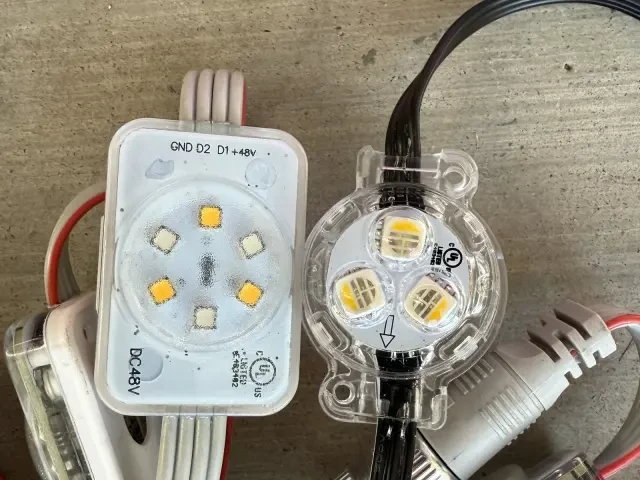
Overhead view. TruLight is on the left (48V, 6 LEDs). Bosso is on the right (12V, 3 LEDs).
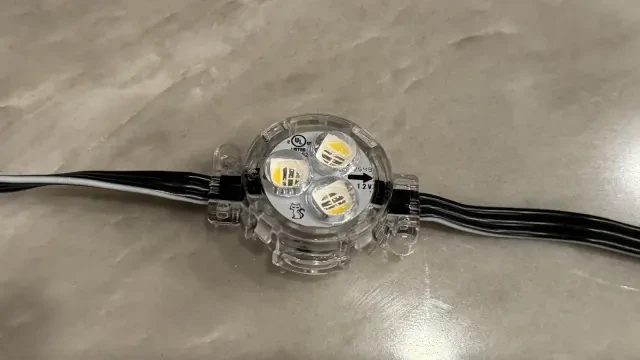
Bosso top-down — three emitters, 12V marking visible.
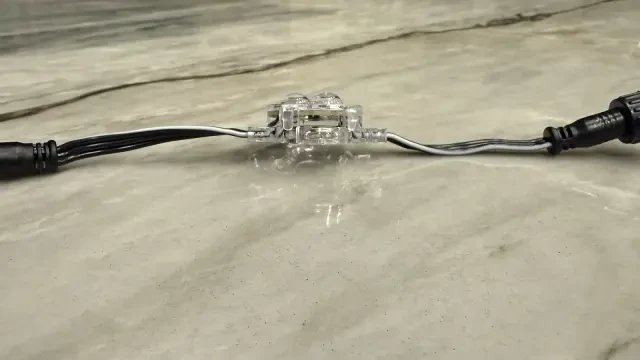
Bosso side profile — protruding lenses sit above the housing.
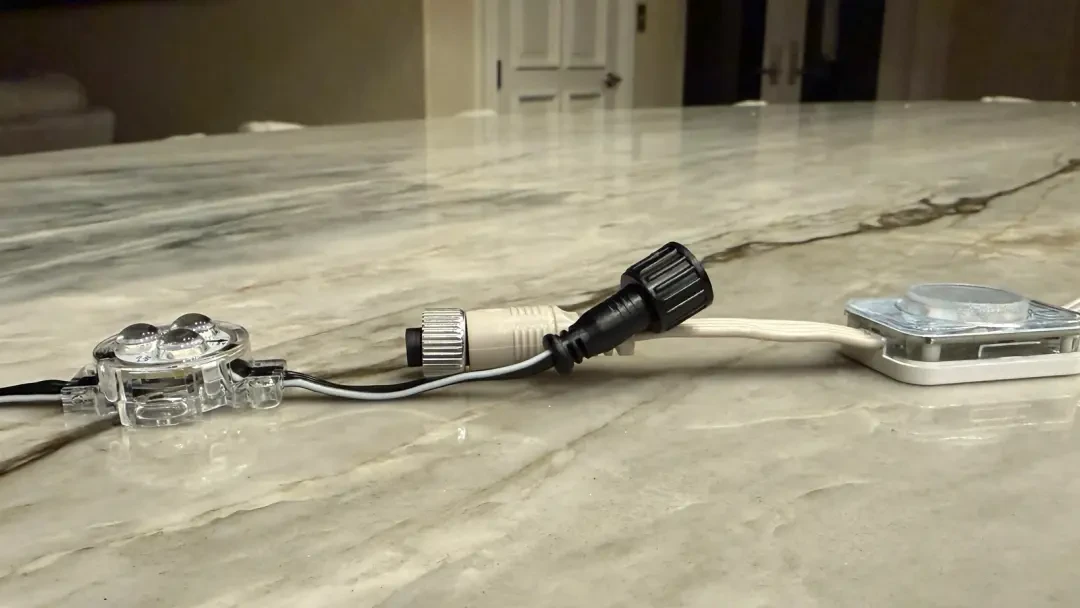
Side profile. Bosso on the left, TruLight on the right.
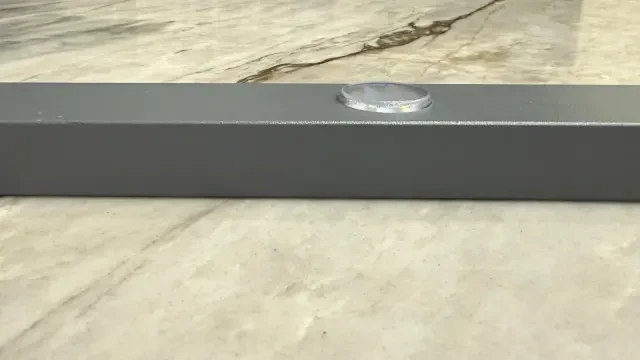
TruLight sits flush in the aluminum track. The diffuser stays close to the track face.
Owner-supplied comparison photos. These photos show node shape, lens profile, emitter count, wiring, and voltage markings.
The Details That Matter
The Light: 6 LEDs vs. 3, and the WS2811 Chip
Bosso's light uses the WS2811 — an older 3-channel RGB chip with a smaller warm white section built into each diode. It can produce a real warm white, but the output is limited because those warm white sections are quarter-size. TruLight uses the UCS7604, a 4-channel RGBW chip with 6 full LEDs per node: 3 RGB plus 3 dedicated full-size warm white LEDs. The warm white LEDs give a brighter, truer white, and the lights carry a 100,000-hour rating — double Bosso's 50,000.
▶ 7:34 in the videoBuild Quality: Thin Wire and a Plastic Housing
At trade shows, Bowdrie hands people a Bosso light and a TruLight light and asks which one they want. He says almost everyone who holds both calls the Bosso puck cheap. The wire is thinner, the housing is plastic, and he can pop the cap off by hand. TruLight uses a thicker 16-gauge wire and a more solid fixture. These lights stay on your house through every season for years, so build quality matters.
▶ 5:27 in the video48V vs. 12V: Heat, Power Injection, and Extra Boxes
Bosso uses 12V and TruLight uses 48V. A lower-voltage system cannot carry power as far on a single run — without more injection, voltage drop dims the lights at the far end. Bowdrie also covers heat: to deliver the same power, a 12V system carries more current, and more current means more heat in the wire. TruLight needs a power injection only about every 400 lights on the 48V run, leaving fewer splices to fail over the life of the system.
▶ 3:31 in the videoThe App: 26 Patterns vs. 144 Effects
Bosso's app is modern and easy to use — 24 holiday presets, 26 moving patterns, scheduling, and sunset/sunrise timers. Bosso now advertises music sync and voice control as part of its free app. TruLight's app has thousands of patterns and 144 effects, more than five times Bosso's 26. You can watch any pattern animate on a sample house before sending it to the lights, and nothing is locked behind a subscription.
▶ 11:00 in the videoZoning: Turning Zones Off vs. True Global Zoning
Bowdrie calls Bosso's zoning 'actually pretty decent' — you can select a section and turn it off, which helps if a window zone shines into a bedroom. But he could not tell from the app whether two zones can show two different patterns at the same time. With TruLight, you can set the front of the house to a Christmas pattern and the back to a soft accent simultaneously, then save it. You can also set a specific stretch of lights to always reverse direction on any pattern.
▶ 13:25 in the videoBosso's App History: Paid Tiers in May 2026
When Bowdrie filmed in May 2026, Bosso divided its app into Free, Premium, and Deluxe tiers at $15–$20 per month. Music sync, smart-home control, and the AI assistant were behind those paid plans. The free tier required watching three ads before changing light colors. As of August 13, 2026, Bosso advertises the app as free with no subscription. Both the earlier policy and the current offer are relevant history for a product attached to your home — ask Bosso to put current app access and fees in writing before you buy.
▶ 15:43 in the video“We will not charge you for features inside the app. This is your system. You paid for it, so it should be yours.”
Bowdrie, TruLight — on TruLight's app policy (28:02)
- * LEDs Per Node: Bosso's three LEDs are not RGB only. Each diode is split into a color section and a smaller warm white section. TruLight uses three separate full-size warm white LEDs in addition to three color LEDs.
- * True Warm White: Both systems produce a genuine warm white. Bosso's comes from a smaller warm white section inside each color diode. TruLight's is typically brighter because three full-size warm white LEDs put out more than three quarter-size sections.
- * True Pure White: Pure white requires driving all six LEDs at once. A warm white section that shares a color diode does not have the output to produce a true pure white.
- * Warranty: Bosso's published FAQ states a 5-year warranty on parts and a 1-year warranty on labor.
- * App Subscription: When this video was recorded in May 2026, Bosso offered paid tiers at $15–$20/month. As of August 13, 2026, Bosso advertises its app as free with no subscription. Confirm current terms directly with Bosso.
- * App Store Rating: Ratings shown in the May 2026 video are historical, not current ratings.
Every app feature, included with the system
Get a quote from NightGlow 365 for a 48V RGBW system. Music, zoning, and smart home control come with it — no monthly fee to use your own lights.